Determinism is a priori
In section 2.1 of my book, I argue that determinism is knowable a priori: The truth of determinism can (and indeed must) be known by non-empirical means such as rational reflection and logical deduction. When I say such things, folks sometimes accuse me of “doing physics from the armchair” and impudently telling physicists their business. Here I answer that charge.
In my book, I flesh out the technical definition of determinism this way: Determinism says that a proposition completely describing any event e is entailed by a proposition completely describing any hypersurface in the past light-cone of e. That’s what it means for e to be necessitated by earlier conditions.
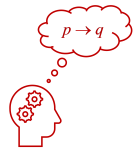
The term “entailed” is crucial. To say that proposition p entails proposition q is to say that, necessarily, p is true only if q is true. Because of that “necessarily,” the knowledge that p entails q is always a priori knowledge. That Vivaldi had red hair is knowable only empirically. But it’s knowable only a priori, not empirically, that his having red hair entails that some things are red.
So it’s knowable only a priori that a proposition completely describing e is entailed by a proposition completely describing any hypersurface in the past light-cone of e. Empirical science can go a long way in revealing the content of those two propositions, but it can’t show that the first proposition entails the second. The Principle of Sufficient Reason, itself a priori, can.
I’m not telling physicists their business. I’m just pointing out that not all knowledge is empirical.
I thank reader Casiana Olteanu for email correspondence that prompted this post.
